
SSM Proposed Sustainability Reporting Requirements: What Malaysian SMEs Need to Know
Published: June 2026
Is ESG Reporting Coming to Malaysia?
Environmental, Social and Governance (ESG) reporting is becoming increasingly important worldwide, and Malaysia is now taking steps towards introducing sustainability reporting requirements under the Companies Act 2016.
On 30 April 2026, the Companies Commission of Malaysia (SSM) released a Consultative Document on the Proposed Amendments to the Companies Act 2016 relating to Sustainability Reporting.
While many SMEs may assume ESG only affects large corporations, the proposed roadmap suggests that sustainability reporting requirements could gradually expand to cover more businesses in the future.
What Is ESG?
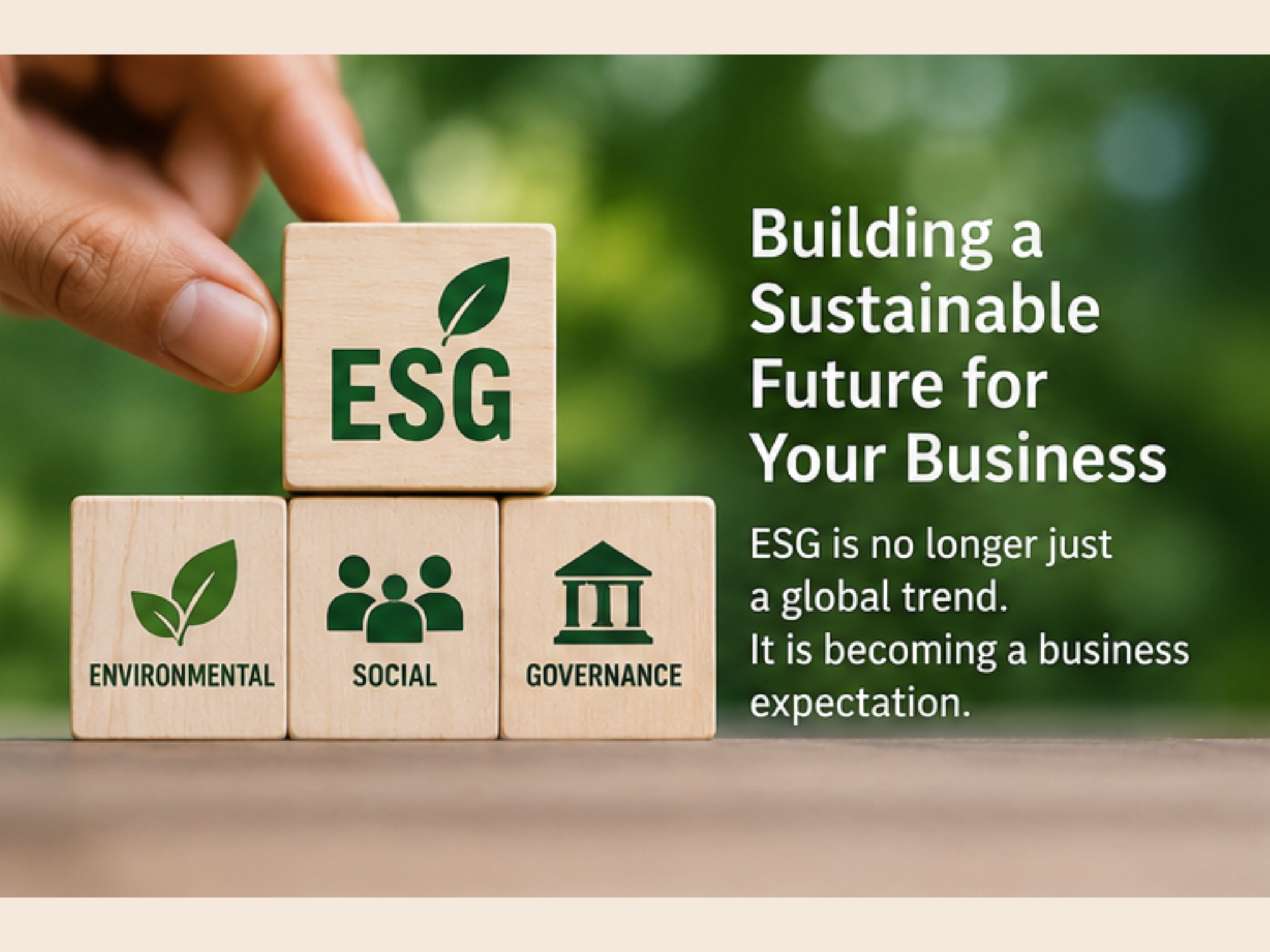
ESG stands for:
Environmental
How a company manages its impact on the environment.
Examples:
Energy consumption
Waste management
Carbon emissions
Recycling initiatives
Social
How a company manages relationships with employees, customers, and communities.
Examples:
Employee welfare
Workplace safety
Diversity and inclusion
Community involvement
Governance
How a company is managed and controlled.
Examples:
Internal controls
Ethical business practices
Risk management
Board oversight
What Is SSM Proposing?
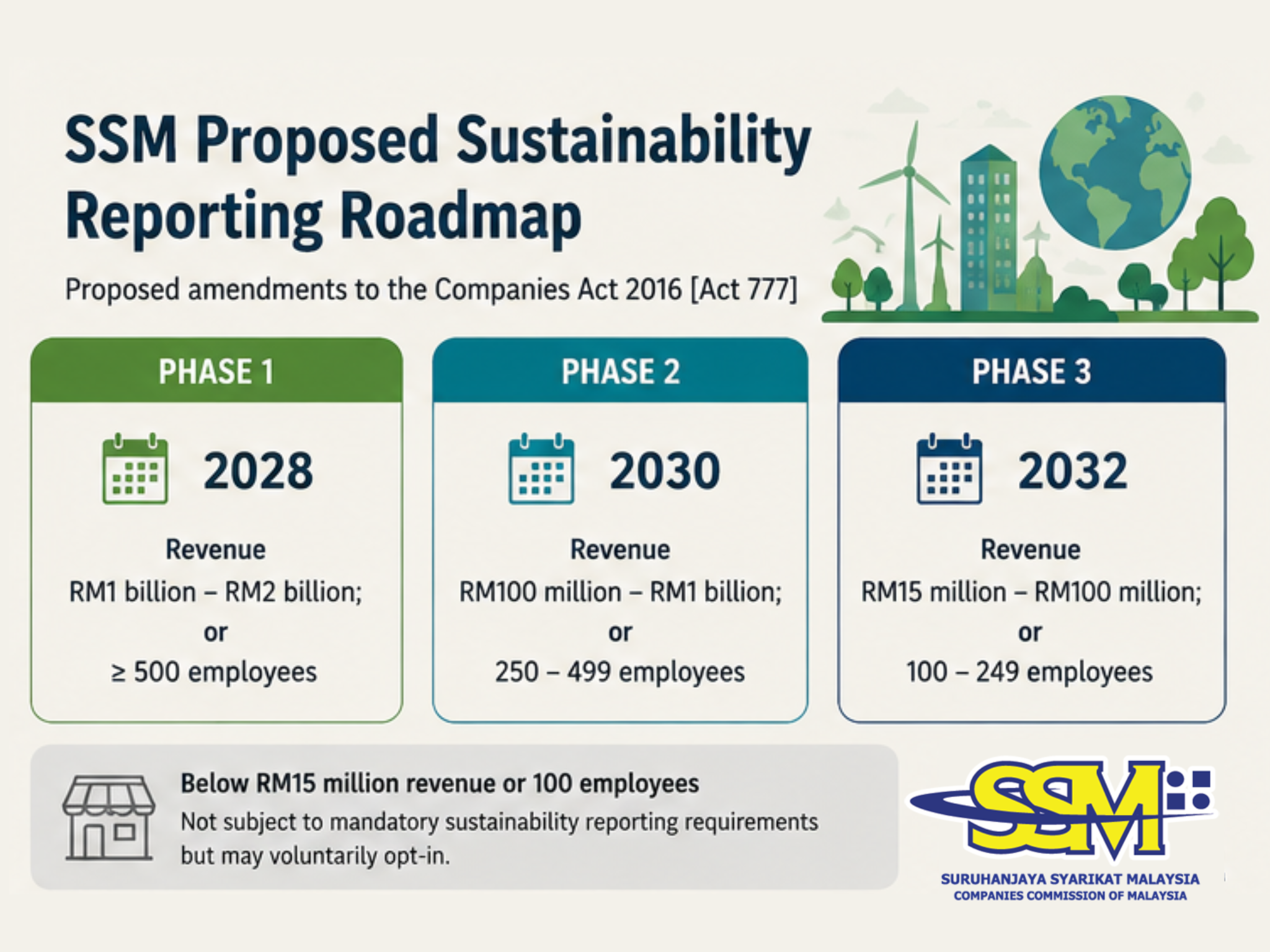
According to SSM's consultation paper, sustainability reporting requirements may be introduced in phases based on company size.
Phase 1
Expected from 2028 onwards:
Revenue between RM1 billion and RM2 billion; or
500 employees or more
Phase 2
Expected from 2030 onwards:
Revenue between RM100 million and RM1 billion; or
250 to 499 employees
Phase 3
Expected from 2032 onwards:
Revenue between RM15 million and RM100 million; or
100 to 249 employees
Smaller Businesses
Companies below:
RM15 million revenue; or
100 employees
are currently not proposed to be subject to mandatory sustainability reporting requirements, although voluntary adoption is encouraged.
Why Should SMEs Care If It Doesn't Apply Yet?
Many SME owners may think:
"My company is not required to submit ESG reports, so why should I bother?"
The reality is that ESG is no longer just about compliance.
Large companies, multinational corporations, banks, investors and government-linked organisations are increasingly requesting ESG-related information from suppliers and business partners.
Even if ESG reporting is not mandatory for your company today, you may be asked for ESG information when:
Applying for financing
Participating in tenders
Becoming a supplier to larger corporations
Working with multinational companies
Seeking investment opportunities
ESG Is Becoming a Business Requirement
The trend is clear.
In the future, companies may be evaluated not only on:
✔ Revenue
✔ Profitability
But also on:
✔ Employee welfare
✔ Sustainability initiatives
✔ Corporate governance
✔ Business ethics
✔ Risk management practices
Businesses that prepare early may gain a competitive advantage.
How Can SMEs Start Preparing?
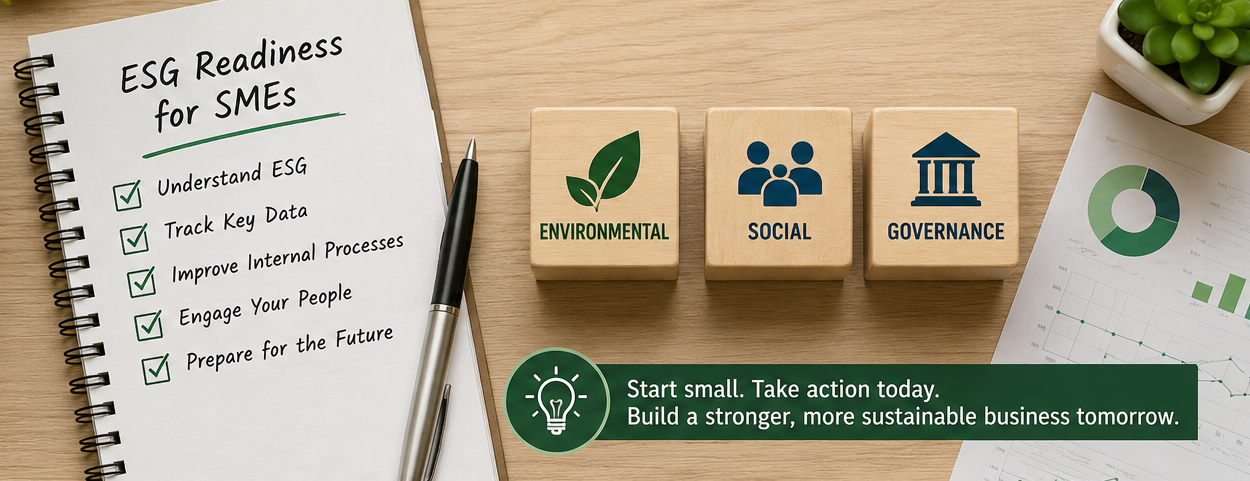
You do not need a complex ESG report immediately.
Instead, SMEs can begin with simple steps:
Environmental
Track electricity and water usage
Reduce paper consumption
Implement recycling initiatives
Social
Improve employee training
Review workplace safety practices
Encourage staff engagement activities
Governance
Document internal policies
Strengthen approval procedures
Improve financial transparency
These are often the building blocks of future ESG reporting.
What Should Business Owners Do Now?
Although mandatory reporting for most SMEs may still be several years away, business owners should start understanding:
What ESG means
How ESG affects financing and tenders
What sustainability data should be tracked
How governance practices can be improved
Early preparation is often easier and more cost-effective than rushing to comply later.
Conclusion
SSM's proposed sustainability reporting framework signals a significant shift in Malaysia's corporate reporting landscape.
While most SMEs are not expected to face mandatory reporting requirements immediately, ESG is increasingly becoming part of how businesses are assessed by customers, investors, banks, and regulators.
The question is no longer:
"Do I need ESG today?"
But rather:
"Am I prepared when ESG becomes a business expectation tomorrow?"
Need Help Preparing for ESG?
At HBA Global Consultancy, we work with experienced ESG professionals who can assist businesses in understanding ESG requirements, building sustainability awareness, and preparing practical ESG frameworks suitable for SMEs.
Whether you are just starting your ESG journey or looking to strengthen your sustainability practices, our team is ready to help.
📞 Contact HBA Global Consultancy today to learn more about ESG readiness and sustainability reporting.